Screenless video is any system for transmitting visual information from a video source without the use of a screen. Screenless computing systems can be divided into three groups: Visual Image, Retinal Direct, and Synaptic Interface. == Visual image == Visual Image screenless display includes any image that the eye can perceive. The most common example of Visual Image screenless display is a hologram. In these cases, light is reflected off some intermediate object (hologram, LCD panel, or cockpit window) before it reaches the retina. In the case of LCD panels the light is refracted from the back of the panel, but is nonetheless a reflected source. Google has proposed a similar system to replace the screens of tablet computers and smartphones. == Retinal display == Virtual retinal display systems are a class of screenless displays in which images are projected directly onto the retina. They are distinguished from visual image systems because light is not reflected from some intermediate object onto the retina, it is instead projected directly onto the retina. Retinal Direct systems, once marketed, hold out the promise of extreme privacy when computing work is done in public places because most snooping relies on viewing the same light as the person who is legitimately viewing the screen, and retinal direct systems send light only into the pupils of their intended viewer. == Synaptic interface == Synaptic Interface screenless video does not use light at all. Visual information completely bypasses the eye and is transmitted directly to the brain. While such systems have only been implemented in humans in rudimentary form - for example, displaying single Braille characters to blind people – success has been achieved in sampling usable video signals from the biological eyes of a living horseshoe crab through their optic nerves, and in sending video signals from electronic cameras into the creatures' brains using the same method.
TalkBack
TalkBack is an accessibility service for the Android operating system that helps blind and visually impaired users to interact with their devices. It uses spoken words, vibration and other audible feedback to allow the user to know what is happening on the screen allowing the user to better interact with their device. The service is pre-installed on many Android devices, and it became part of the Android Accessibility Suite in 2017. According to the Google Play Store, the Android Accessibility Suite has been downloaded over five billion times, including devices that have the suite preinstalled. == Open-source == Google releases the source code of TalkBack with some releases of the accessibility service to GitHub, with the latest of these changes being from May 6, 2021. The source for these versions of Google TalkBack have been released under the Apache License version 2.0. == Release history ==
Generalized blockmodeling
In generalized blockmodeling, the blockmodeling is done by "the translation of an equivalence type into a set of permitted block types", which differs from the conventional blockmodeling, which is using the indirect approach. It's a special instance of the direct blockmodeling approach. Generalized blockmodeling was introduced in 1994 by Patrick Doreian, Vladimir Batagelj and Anuška Ferligoj. == Definition == Generalized blockmodeling approach is a direct one, "where the optimal partition(s) is (are) identified based on minimal values of a compatible criterion function defined by the difference between empirical blocks and corresponding ideal blocks". At the same time, the much broader set of block types is introduced (while in conventional blockmodeling only certain types are used). The conventional blockmodeling is inductive due to nonspecification of neither the clusters or the location of block types, while in generalized blockmodeling the blockmodel is specified with more detail than just the permition of certain block types (e.g., prespecification). Further, it's possible to define departures from the permitted (ideal) blocktype, using criterion function. Using local optimization procedure, firstly the initial clustering (with specified number of clusters is done, based on random creation. How the clusters are neighboring to each other, is based on two transformations: 1) a vertex is moved from one to another cluster or 2) a pair of vertices is interchanged between two different clusters. This process of transformation steps is repeated many times, until only the best fitting partitions (with the minimized value of the criterion function) are kept as blockmodels for the future exploration of the network. Different types of generalized blockmodeling are: generalized binary blockmodeling, generalized valued blockmodeling and generalized homogeneity blockmodeling. == Benefits == According to Patrick Doreian, the benefits of generalized blockmodeling, are as follows: usage of explicit criterion function, compatible with a given type of equivalence, results to in-built measure of fit, which is integral to the establishment of the blockmodels (in conventional blockmodeling, there is no compelling and coherent measures of fit); partitions, based on generalized blockmodeling, regularly outperform and never perform less well than the partitions, based on conventional approach; with generalized blockmodeling it's possible to specify new types of blockmodels; this potentially unlimited set of new block types also results in permittion of inclusion of substantively driven blockmodels; in generalized blockmodeling, the specification of the block types and the location of some of them in the blockmodel is possible; researcher can speficy which (pair of) vertices must be (not) clustered together; this approach also allows the imposition of penalties, resulting into identification of empirical null blocks without inconsistencies with a corresponding ideal null block. == Problems == According to Doreian, the problems of generalized blockmodeling, are as follows: unknown sensitivity to particular data features, examination of boundary problems, computationally burdensome, which results in a constraint regarding practical network size (generalized blockmodeling is thus primarily used to analyse smaller networks (below 100 units)), identifying structure from incomplete network information, most of generalized blockmodeling is based on binary networks, but there is also development in the field of valued networks, criterion function is minimized for a specified blockmodel, with results in issues of evaluating statistically, based on the structural data alone, problems regarding three dimensional network data, problems regarding the evolution of fundamental network structure. == Book == The book with the same title, Generalized blockmodeling, written by Patrick Doreian, Vladimir Batagelj and Anuška Ferligoj, was in 2007 awarded the Harrison White Outstanding Book Award by the Mathematical Sociology Section of American Sociological Association.
Multiple discriminant analysis
Multiple Discriminant Analysis (MDA) is a multivariate dimensionality reduction technique. It has been used to predict signals as diverse as neural memory traces and corporate failure. MDA is not directly used to perform classification. It merely supports classification by yielding a compressed signal amenable to classification. The method described in Duda et al. (2001) §3.8.3 projects the multivariate signal down to an M−1 dimensional space where M is the number of categories. MDA is useful because most classifiers are strongly affected by the curse of dimensionality. In other words, when signals are represented in very-high-dimensional spaces, the classifier's performance is catastrophically impaired by the overfitting problem. This problem is reduced by compressing the signal down to a lower-dimensional space as MDA does. MDA has been used to reveal neural codes.
Modes of variation
In statistics, modes of variation are a continuously indexed set of vectors or functions that are centered at a mean and are used to depict the variation in a population or sample. Typically, variation patterns in the data can be decomposed in descending order of eigenvalues with the directions represented by the corresponding eigenvectors or eigenfunctions. Modes of variation provide a visualization of this decomposition and an efficient description of variation around the mean. Both in principal component analysis (PCA) and in functional principal component analysis (FPCA), modes of variation play an important role in visualizing and describing the variation in the data contributed by each eigencomponent. In real-world applications, the eigencomponents and associated modes of variation aid to interpret complex data, especially in exploratory data analysis (EDA). == Formulation == Modes of variation are a natural extension of PCA and FPCA. === Modes of variation in PCA === If a random vector X = ( X 1 , X 2 , ⋯ , X p ) T {\displaystyle \mathbf {X} =(X_{1},X_{2},\cdots ,X_{p})^{T}} has the mean vector μ p {\displaystyle {\boldsymbol {\mu }}_{p}} , and the covariance matrix Σ p × p {\displaystyle \mathbf {\Sigma } _{p\times p}} with eigenvalues λ 1 ≥ λ 2 ≥ ⋯ ≥ λ p ≥ 0 {\displaystyle \lambda _{1}\geq \lambda _{2}\geq \cdots \geq \lambda _{p}\geq 0} and corresponding orthonormal eigenvectors e 1 , e 2 , ⋯ , e p {\displaystyle \mathbf {e} _{1},\mathbf {e} _{2},\cdots ,\mathbf {e} _{p}} , by eigendecomposition of a real symmetric matrix, the covariance matrix Σ {\displaystyle \mathbf {\Sigma } } can be decomposed as Σ = Q Λ Q T , {\displaystyle \mathbf {\Sigma } =\mathbf {Q} \mathbf {\Lambda } \mathbf {Q} ^{T},} where Q {\displaystyle \mathbf {Q} } is an orthogonal matrix whose columns are the eigenvectors of Σ {\displaystyle \mathbf {\Sigma } } , and Λ {\displaystyle \mathbf {\Lambda } } is a diagonal matrix whose entries are the eigenvalues of Σ {\displaystyle \mathbf {\Sigma } } . By the Karhunen–Loève expansion for random vectors, one can express the centered random vector in the eigenbasis X − μ = ∑ k = 1 p ξ k e k , {\displaystyle \mathbf {X} -{\boldsymbol {\mu }}=\sum _{k=1}^{p}\xi _{k}\mathbf {e} _{k},} where ξ k = e k T ( X − μ ) {\displaystyle \xi _{k}=\mathbf {e} _{k}^{T}(\mathbf {X} -{\boldsymbol {\mu }})} is the principal component associated with the k {\displaystyle k} -th eigenvector e k {\displaystyle \mathbf {e} _{k}} , with the properties E ( ξ k ) = 0 , Var ( ξ k ) = λ k , {\displaystyle \operatorname {E} (\xi _{k})=0,\operatorname {Var} (\xi _{k})=\lambda _{k},} and E ( ξ k ξ l ) = 0 for l ≠ k . {\displaystyle \operatorname {E} (\xi _{k}\xi _{l})=0\ {\text{for}}\ l\neq k.} Then the k {\displaystyle k} -th mode of variation of X {\displaystyle \mathbf {X} } is the set of vectors, indexed by α {\displaystyle \alpha } , m k , α = μ ± α λ k e k , α ∈ [ − A , A ] , {\displaystyle \mathbf {m} _{k,\alpha }={\boldsymbol {\mu }}\pm \alpha {\sqrt {\lambda _{k}}}\mathbf {e} _{k},\alpha \in [-A,A],} where A {\displaystyle A} is typically selected as 2 or 3 {\displaystyle 2\ {\text{or}}\ 3} . === Modes of variation in FPCA === For a square-integrable random function X ( t ) , t ∈ T ⊂ R p {\displaystyle X(t),t\in {\mathcal {T}}\subset R^{p}} , where typically p = 1 {\displaystyle p=1} and T {\displaystyle {\mathcal {T}}} is an interval, denote the mean function by μ ( t ) = E ( X ( t ) ) {\displaystyle \mu (t)=\operatorname {E} (X(t))} , and the covariance function by G ( s , t ) = Cov ( X ( s ) , X ( t ) ) = ∑ k = 1 ∞ λ k φ k ( s ) φ k ( t ) , {\displaystyle G(s,t)=\operatorname {Cov} (X(s),X(t))=\sum _{k=1}^{\infty }\lambda _{k}\varphi _{k}(s)\varphi _{k}(t),} where λ 1 ≥ λ 2 ≥ ⋯ ≥ 0 {\displaystyle \lambda _{1}\geq \lambda _{2}\geq \cdots \geq 0} are the eigenvalues and { φ 1 , φ 2 , ⋯ } {\displaystyle \{\varphi _{1},\varphi _{2},\cdots \}} are the orthonormal eigenfunctions of the linear Hilbert–Schmidt operator G : L 2 ( T ) → L 2 ( T ) , G ( f ) = ∫ T G ( s , t ) f ( s ) d s . {\displaystyle G:L^{2}({\mathcal {T}})\rightarrow L^{2}({\mathcal {T}}),\,G(f)=\int _{\mathcal {T}}G(s,t)f(s)ds.} By the Karhunen–Loève theorem, one can express the centered function in the eigenbasis, X ( t ) − μ ( t ) = ∑ k = 1 ∞ ξ k φ k ( t ) , {\displaystyle X(t)-\mu (t)=\sum _{k=1}^{\infty }\xi _{k}\varphi _{k}(t),} where ξ k = ∫ T ( X ( t ) − μ ( t ) ) φ k ( t ) d t {\displaystyle \xi _{k}=\int _{\mathcal {T}}(X(t)-\mu (t))\varphi _{k}(t)dt} is the k {\displaystyle k} -th principal component with the properties E ( ξ k ) = 0 , Var ( ξ k ) = λ k , {\displaystyle \operatorname {E} (\xi _{k})=0,\operatorname {Var} (\xi _{k})=\lambda _{k},} and E ( ξ k ξ l ) = 0 for l ≠ k . {\displaystyle \operatorname {E} (\xi _{k}\xi _{l})=0{\text{ for }}l\neq k.} Then the k {\displaystyle k} -th mode of variation of X ( t ) {\displaystyle X(t)} is the set of functions, indexed by α {\displaystyle \alpha } , m k , α ( t ) = μ ( t ) ± α λ k φ k ( t ) , t ∈ T , α ∈ [ − A , A ] {\displaystyle m_{k,\alpha }(t)=\mu (t)\pm \alpha {\sqrt {\lambda _{k}}}\varphi _{k}(t),\ t\in {\mathcal {T}},\ \alpha \in [-A,A]} that are viewed simultaneously over the range of α {\displaystyle \alpha } , usually for A = 2 or 3 {\displaystyle A=2\ {\text{or}}\ 3} . == Estimation == The formulation above is derived from properties of the population. Estimation is needed in real-world applications. The key idea is to estimate mean and covariance. === Modes of variation in PCA === Suppose the data x 1 , x 2 , ⋯ , x n {\displaystyle \mathbf {x} _{1},\mathbf {x} _{2},\cdots ,\mathbf {x} _{n}} represent n {\displaystyle n} independent drawings from some p {\displaystyle p} -dimensional population X {\displaystyle \mathbf {X} } with mean vector μ {\displaystyle {\boldsymbol {\mu }}} and covariance matrix Σ {\displaystyle \mathbf {\Sigma } } . These data yield the sample mean vector x ¯ {\displaystyle {\overline {\mathbf {x} }}} , and the sample covariance matrix S {\displaystyle \mathbf {S} } with eigenvalue-eigenvector pairs ( λ ^ 1 , e ^ 1 ) , ( λ ^ 2 , e ^ 2 ) , ⋯ , ( λ ^ p , e ^ p ) {\displaystyle ({\hat {\lambda }}_{1},{\hat {\mathbf {e} }}_{1}),({\hat {\lambda }}_{2},{\hat {\mathbf {e} }}_{2}),\cdots ,({\hat {\lambda }}_{p},{\hat {\mathbf {e} }}_{p})} . Then the k {\displaystyle k} -th mode of variation of X {\displaystyle \mathbf {X} } can be estimated by m ^ k , α = x ¯ ± α λ ^ k e ^ k , α ∈ [ − A , A ] . {\displaystyle {\hat {\mathbf {m} }}_{k,\alpha }={\overline {\mathbf {x} }}\pm \alpha {\sqrt {{\hat {\lambda }}_{k}}}{\hat {\mathbf {e} }}_{k},\alpha \in [-A,A].} === Modes of variation in FPCA === Consider n {\displaystyle n} realizations X 1 ( t ) , X 2 ( t ) , ⋯ , X n ( t ) {\displaystyle X_{1}(t),X_{2}(t),\cdots ,X_{n}(t)} of a square-integrable random function X ( t ) , t ∈ T {\displaystyle X(t),t\in {\mathcal {T}}} with the mean function μ ( t ) = E ( X ( t ) ) {\displaystyle \mu (t)=\operatorname {E} (X(t))} and the covariance function G ( s , t ) = Cov ( X ( s ) , X ( t ) ) {\displaystyle G(s,t)=\operatorname {Cov} (X(s),X(t))} . Functional principal component analysis provides methods for the estimation of μ ( t ) {\displaystyle \mu (t)} and G ( s , t ) {\displaystyle G(s,t)} in detail, often involving point wise estimate and interpolation. Substituting estimates for the unknown quantities, the k {\displaystyle k} -th mode of variation of X ( t ) {\displaystyle X(t)} can be estimated by m ^ k , α ( t ) = μ ^ ( t ) ± α λ ^ k φ ^ k ( t ) , t ∈ T , α ∈ [ − A , A ] . {\displaystyle {\hat {m}}_{k,\alpha }(t)={\hat {\mu }}(t)\pm \alpha {\sqrt {{\hat {\lambda }}_{k}}}{\hat {\varphi }}_{k}(t),t\in {\mathcal {T}},\alpha \in [-A,A].} == Applications == Modes of variation are useful to visualize and describe the variation patterns in the data sorted by the eigenvalues. In real-world applications, modes of variation associated with eigencomponents allow to interpret complex data, such as the evolution of function traits and other infinite-dimensional data. To illustrate how modes of variation work in practice, two examples are shown in the graphs to the right, which display the first two modes of variation. The solid curve represents the sample mean function. The dashed, dot-dashed, and dotted curves correspond to modes of variation with α = ± 1 , ± 2 , {\displaystyle \alpha =\pm 1,\pm 2,} and ± 3 {\displaystyle \pm 3} , respectively. The first graph displays the first two modes of variation of female mortality data from 41 countries in 2003. The object of interest is log hazard function between ages 0 and 100 years. The first mode of variation suggests that the variation of female mortality is smaller for ages around 0 or 100, and larger for ages around 25. An appropriate and intuitive interpretation is that mortality around 25 is driven by accidental death, while around 0 or 100, mortality is related to congenital disease or natural death. Compared to female mortality
Frankenstein complex
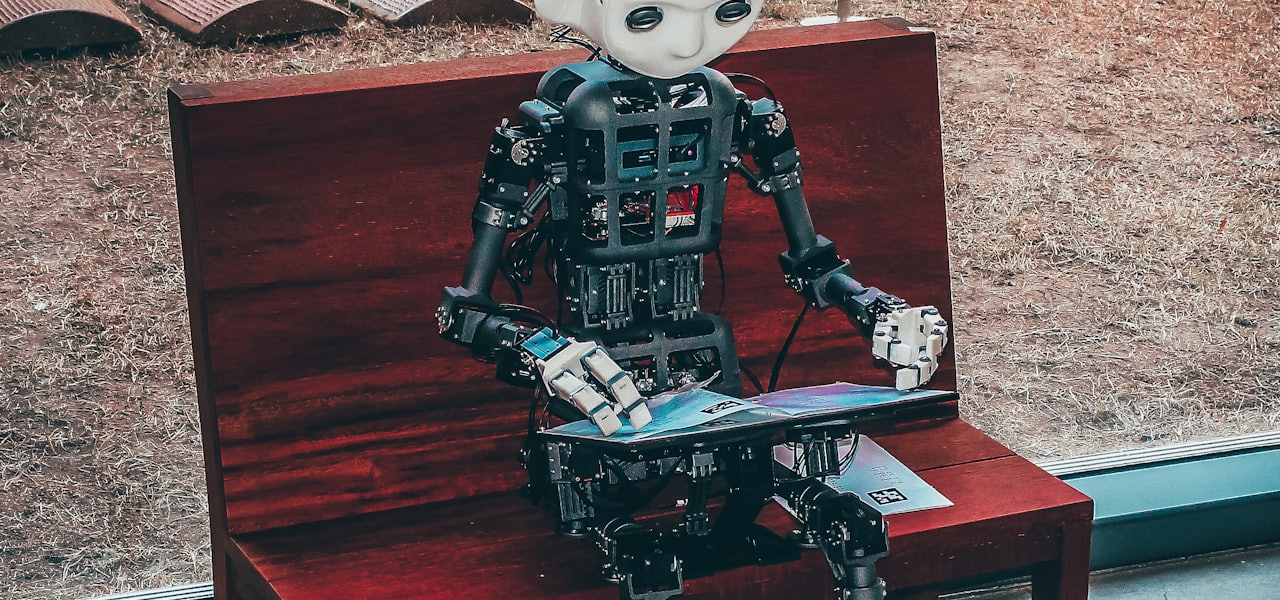
The Frankenstein complex is a term coined by Isaac Asimov in his robot series, referring to the fear of mechanical men. == History == Some of Asimov's science fiction short stories and novels predict that this suspicion will become strongest and most widespread in respect of "mechanical men" that most-closely resemble human beings (see android), but it is also present on a lower level against robots that are plainly electromechanical automatons. The "Frankenstein complex" is similar in many respects to Masahiro Mori's uncanny valley hypothesis. The name, "Frankenstein complex", is derived from the name of Victor Frankenstein in the 1818 novel Frankenstein; or, The Modern Prometheus by Mary Shelley. In Shelley's story, Frankenstein created an intelligent, somewhat superhuman being, but he finds that his creation is horrifying to behold and abandons it. This ultimately leads to Victor's death at the conclusion of a vendetta between himself and his creation. In much of his fiction, Asimov depicts the general attitude of the public towards robots as negative, with ordinary people fearing that robots will either replace them or dominate them, although dominance would not be allowed under the specifications of the Three Laws of Robotics, the first of which is: "A robot may not harm a human being or, through inaction, allow a human being to come to harm." However, Asimov's fictitious earthly public is not fully persuaded by this, and remains largely suspicious and fearful of robots. I, Robot's short story "Little Lost Robot" is about this "fear of robots". In Asimov's robot novels, the Frankenstein complex is a major problem for roboticists and robot manufacturers. They do all they can to reassure the public that robots are harmless, even though this sometimes involves hiding the truth because they think that the public would misunderstand it. The fear by the public and the response of the manufacturers is an example of the theme of paternalism, the dread of paternalism, and the conflicts that arise from it in Asimov's fiction. The same theme occurs in many later works of fiction featuring robots, although it is rarely referred to as such.
Generalized canonical correlation
In statistics, the generalized canonical correlation analysis (gCCA), is a way of making sense of cross-correlation matrices between the sets of random variables when there are more than two sets. While a conventional CCA generalizes principal component analysis (PCA) to two sets of random variables, a gCCA generalizes PCA to more than two sets of random variables. The canonical variables represent those common factors that can be found by a large PCA of all of the transformed random variables after each set underwent its own PCA. == Applications == The Helmert-Wolf blocking (HWB) method of estimating linear regression parameters can find an optimal solution only if all cross-correlations between the data blocks are zero. They can always be made to vanish by introducing a new regression parameter for each common factor. The gCCA method can be used for finding those harmful common factors that create cross-correlation between the blocks. However, no optimal HWB solution exists if the random variables do not contain enough information on all of the new regression parameters.